

A Tightening Door: Nigeria and America’s Shifting Immigration Mood
By Naija Enquirer Staff
At just after midnight on 1 January 2026, a quiet but consequential change will take effect thousands of kilometres away from Nigeria’s airports and embassies. For many Nigerians hoping to study, visit, exchange ideas or begin new lives in the United States, the path forward will narrow.
Under Presidential Proclamation 10998, the United States will partially suspend the issuance of several categories of visas to Nigerian nationals, placing Africa’s most populous country among 19 nations affected by Washington’s latest border and national security measures.
The announcement, released by the US Mission in Nigeria, signals more than a procedural adjustment. It reflects a broader recalibration of America’s immigration, security and diplomatic posture — one that increasingly intersects with Nigeria’s own challenges at home.
What the visa suspension actually means
The proclamation imposes a partial suspension, not a blanket ban. Still, the categories affected strike at the heart of everyday mobility.
Nonimmigrant B-1/B-2 visas, commonly used for business and tourism, are included. So too are F, M and J visas, which cover students and exchange visitors — a route many young Nigerians have relied on for decades as a bridge to education and global exposure.
Certain immigrant visas are also affected, though US authorities say there will be limited exceptions.
Importantly, the suspension applies only to foreign nationals outside the United States on the effective date who do not already hold a valid US visa. Visas issued before 12:01 a.m. Eastern Standard Time on 1 January 2026 will not be revoked.
Applicants may still submit forms and attend interviews, but approval is no longer guaranteed. As the US Mission noted, Nigerians may now be “ineligible for visa issuance or admission” under the new rules.
Who is exempt — and who is not
The proclamation carves out specific exemptions, underscoring its selective nature.
Dual nationals applying with passports from unaffected countries are excluded, as are lawful permanent residents, eligible Special Immigrant Visa holders who worked with the US government, and participants in major international sporting events.
There is also an exemption for ethnic and religious minorities facing persecution in Iran, though this provision does not directly affect Nigerians.
For many ordinary applicants — students, families and first-time travellers — these exemptions offer little comfort.
Nigeria in a widening net
Nigeria’s inclusion did not occur in isolation. In recent months, Washington has taken steps that place renewed scrutiny on Africa’s largest economy.
In October, the US government returned Nigeria to its list of countries accused of violating religious freedom, citing persistent insecurity and attacks on Christian communities. This was followed by Nigeria’s appearance on a revised travel restriction list, suggesting a gradual tightening rather than a sudden rupture.
Together, these moves point to a growing alignment between US immigration controls and broader assessments of governance, security and internal stability in partner countries.
‘A Christmas offer’ — self-deportation and incentives
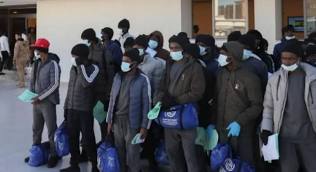
Adding to the pressure, the US Department of Homeland Security recently announced a $3,000 cash incentive and free flights for undocumented immigrants who voluntarily leave the country before the end of the year.
The programme, managed through the CBP Home app, also promises waived civil fines and expedited processing.
Homeland Security Secretary Kristi Noem framed the initiative starkly: accept the offer, or face arrest, deportation and permanent exclusion.
Since January 2025, US authorities say about 1.9 million undocumented migrants have self-deported, with tens of thousands using the CBP Home programme. For Nigerians living with uncertain legal status, the signal is unmistakable.
A diplomatic signal: recalling the US ambassador
Immigration is not the only area reflecting a shift in Washington’s posture.
The Trump administration has recalled US ambassador Richard Mills as part of a wider diplomatic reshuffle affecting nearly 30 senior postings worldwide. Africa has been the most affected region, with ambassadors withdrawn from 13 countries, including Nigeria.
While US officials insist the move is routine, the timing has raised questions. Nigeria remains a key American partner in regional security, counter-terrorism, trade and development, and diplomatic continuity matters.
Between borders and belonging
Viewed separately, visa suspensions, deportation incentives and diplomatic recalls may appear as routine policy tools. Taken together, they tell a deeper story.
For decades, the United States has represented opportunity for Nigerians — in classrooms, laboratories, boardrooms and diaspora communities. These measures do not end that relationship, but they reshape it, replacing predictability with uncertainty.
As 2026 approaches, Washington’s message is increasingly clear: entry will be narrower, scrutiny tighter and the cost of uncertainty higher.
For Nigerians at home and abroad, the question is no longer just about visas. It is about how a once-familiar door is being quietly, steadily eased shut.