

Africa’s Gas Inaction a Human Tragedy, Says Derefaka at Asharami Square
LAGOS — Africa’s vast gas reserves remain largely untapped—and according to oil and gas expert Dr. Justice Derefaka, that failure is not just economic mismanagement, but “a human tragedy.”
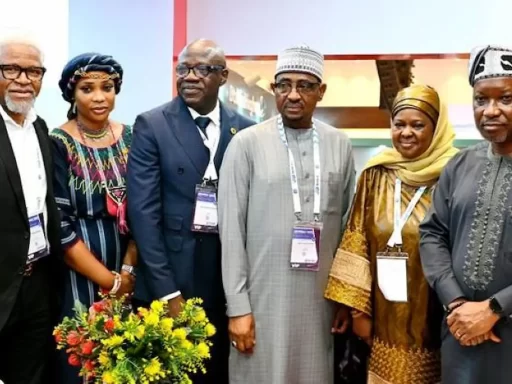
Speaking at Sahara Group’s Asharami Square 2.0 in Lagos over the weekend, Derefaka delivered a sobering indictment of Africa’s energy paralysis. “Wealth below the ground, want above it—this is not a policy failure,” he said. “It’s a human tragedy.”
A Continent Sitting on Power, Struggling in Darkness
Derefaka—former technical adviser on gas to two former petroleum ministers—highlighted the continent’s potential: over 620 trillion cubic feet of gas across Africa, with Nigeria alone holding 206 TCF in proven reserves and an upside exceeding 600 TCF.
“With this resource,” he noted, “we could power homes, feed factories, and secure our future. Yet 600 million Africans still live in the dark, and 900 million cook with firewood and charcoal.”
He called the contradiction between resource abundance and energy poverty a failure of will, not ability. “Entire economies are throttled by fragile grids and imported fuels,” he added.
Gas Must Power a Just Transition
In light of the global energy transition and climate targets, Derefaka urged that gas be treated not as a threat—but as a bridge. “Climate ambition must meet climate justice,” he said. “Africa cannot be asked to abandon its gas while richer nations burn coal and buy our LNG.”
He argued that even if Africa fully developed its gas reserves, its per capita emissions would remain among the world’s lowest. “The gains in health, jobs, and economic growth would be enormous,” he said.
No More Exporting Progress
Warning against the ongoing export of raw resources to fuel foreign economies, Derefaka called for a fundamental shift: “We must stop exporting our future. We should add value here, process gas here, power Africa from within.”
He outlined a path forward: stronger governance, regional infrastructure, investment in human capital, and policy alignment that balances growth with global climate responsibilities.
The Time for Talk Is Over
Derefaka closed with a passionate call to action: “If not us, then who? If not now, then when? We have the resource. We have the need. We have the knowledge. What remains is the collective will to act.”
“We cannot wait for others to light our fires for us. We must rise together to claim the dignity, justice, and dreams our people have been denied for far too long.”