


Dangote v Farouk: Nigeria’s Petroleum Sector on Edge
By Naija Enquirer Staff
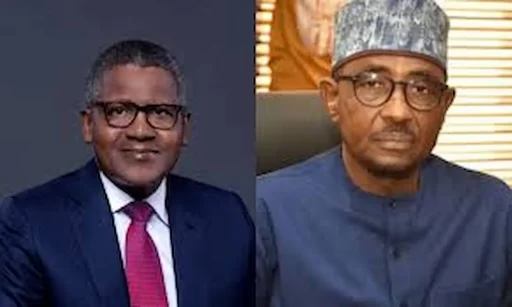
Nigeria’s downstream petroleum sector has been thrown back into uncertainty following corruption allegations by Africa’s richest man, Aliko Dangote, against the head of the Nigerian Midstream and Downstream Petroleum Regulatory Authority (NMDPRA), Farouk Ahmed.
The dispute, which pits the Dangote Refinery against the country’s fuel regulator, comes at a delicate time as the Federal Government works to stabilise fuel supply and pricing after the removal of petrol subsidies.
What began as a regulatory disagreement has escalated into a high-profile confrontation, raising questions about governance, accountability and investor confidence in Nigeria’s ongoing energy sector reforms.
The Allegation That Triggered Official Probes
Dangote, president of the Dangote Group, has petitioned the Independent Corrupt Practices and Other Related Offences Commission (ICPC), accusing the NMDPRA chief executive of corruption and financial impropriety.
At the centre of the allegation is Dangote’s claim that Ahmed spent about $5 million on secondary school education for his children in Switzerland—an amount Dangote argues is inconsistent with the income of a public servant.
The ICPC has confirmed receipt of the petition and says investigations will be conducted, although no findings have yet been made.
Parliament Steps In
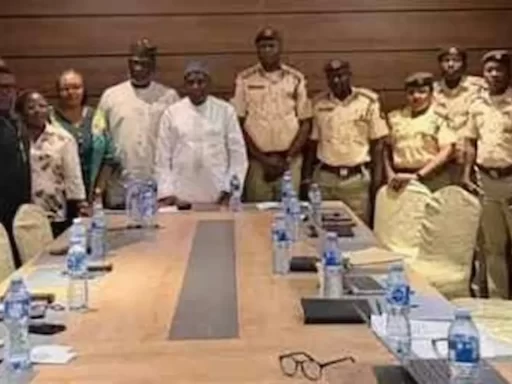
Amid fears that the standoff could destabilise the fuel market, the House of Representatives has intervened by summoning both Dangote and NMDPRA officials.
A joint committee on petroleum resources has ordered an immediate halt to public exchanges between the parties while lawmakers conduct an inquiry into the matter.
Lawmakers warned that unresolved tensions over import licences, domestic refining capacity and regulatory oversight could undermine recent gains in fuel supply stability in the post-subsidy era.
Claims of Sabotage and Industry Fault Lines
Beyond the corruption allegations, Dangote has alleged systemic sabotage within Nigeria’s oil and gas sector, claiming his refinery has lost about $82 million to theft and vandalism.
He alleged that organised cartels continue to undermine infrastructure, pipelines and refining operations—an issue that has long plagued the industry.
While some critics point to labour disputes and restructuring challenges at the Dangote Refinery, the company has dismissed such claims.
A Dispute Rooted in Regulation
The disagreement dates back to July 2024 when the NMDPRA questioned the quality of products from local refineries, including Dangote’s—comments the industrialist strongly rejected.
At stake is whether Nigeria’s domestic refining capacity can reliably meet national demand or whether fuel imports must continue in the interim.
The NMDPRA maintains that its licensing and regulatory decisions are guided strictly by the Petroleum Industry Act, which prioritises supply security and quality standards.
The Regulator’s Defence
Responding to the allegations, Ahmed denied any wrongdoing, describing the claims as misleading and poorly timed.
He said the figures cited for his children’s education ignore scholarships, family contributions and personal savings accumulated over more than three decades of public service.
The NMDPRA chief has invited investigations by the ICPC, EFCC, Code of Conduct Bureau and the National Assembly, insisting his financial records can withstand scrutiny.
Why the Dispute Matters
The confrontation has evolved beyond a clash of personalities into a broader test of Nigeria’s regulatory credibility.
As the country relies on local refining to reduce foreign exchange pressure and stabilise fuel prices, the outcome of the probes could significantly shape investor confidence in the petroleum sector.
For now, the allegations remain unproven, investigations are ongoing, and Nigeria’s lawmakers and anti-graft agencies face mounting pressure to deliver clarity—swiftly and credibly.