

How Some Oil Communities Are Undermining Security Operations Against Crude Oil Theft — JTF Commander
By Naija Enquirer Staff
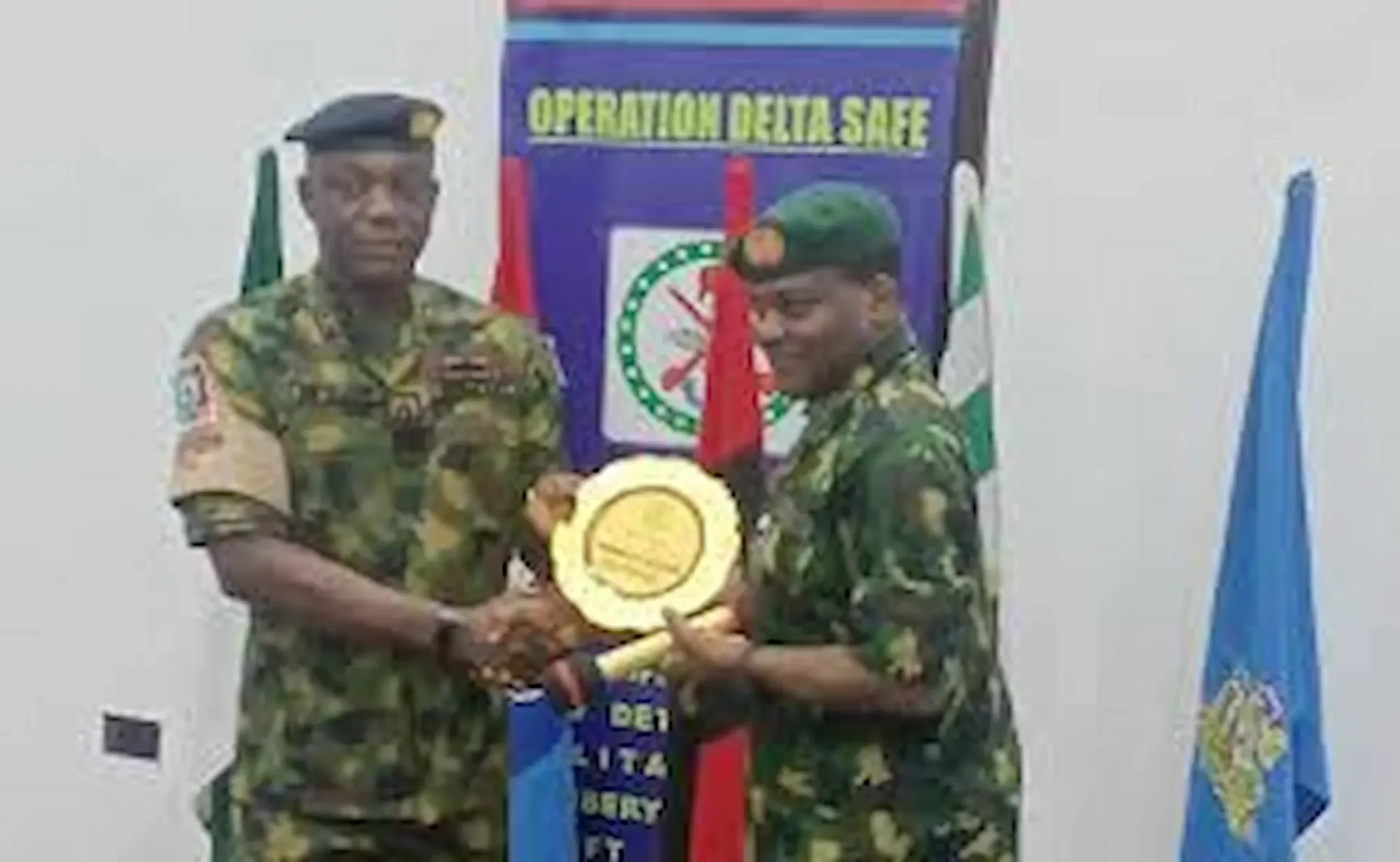
The Commander of the Joint Task Force (JTF), Operation Delta Safe (OPDS), Rear Admiral Olugbenga Oladipo, has disclosed that some oil-bearing communities are undermining security operations against crude oil theft by leaking intelligence to suspects and enabling them to evade arrest.
Oladipo made the disclosure while speaking on the challenges confronting security agencies in the Niger Delta, noting that in some instances, communities have allegedly collaborated with oil theft suspects and attempted to disrupt operations.
“Some communities have, on several occasions, tried to block oil platforms and shut down oil production facilities,” he said, adding that such actions had prompted the JTF to deploy swiftly to neutralise threats through military engagement and mediation.
However, the OPDS commander commended other host communities for supporting security efforts by providing real-time intelligence, which he said had contributed significantly to successful operations.
To address rising disputes between oil companies and host communities, Oladipo said OPDS has established a Situation Room and a Mediation Centre, which recorded its highest number of interventions in December as tensions escalated under the Petroleum Industry Act (PIA).
“The Petroleum Industry Act clearly defines everybody’s rights. That is why we set up a mediation centre and a civic centre. Communities should report companies, and companies should also report communities,” he said.
He stressed that OPDS operates strictly within its national mandate, insisting that the task force is not aligned with oil companies or host communities.
“I am working for the government. I am not working for any company or any community. Our mandate is to protect oil and gas infrastructure, protect lives and property, and stop oil theft and bunkering. That mandate is for the whole nation,” Oladipo stated.
According to him, the command received petitions daily up to December 24 last year, describing the period as one of intense operations aimed at ensuring peace across the South-East and South-South regions.
“There was no Christmas, no night or day for us. We were moving through Anambra, the Imo River and other areas, on land and water, to ensure everyone had a peaceful December. By God’s grace, there was no major incident,” he said.
Oladipo attributed the calm to collaboration with the Chief of Defence Staff and other security agencies, which he said provided actionable intelligence.
He also raised concerns over an emerging threat in oil theft, disclosing that security forces are now tracking chemical supply chains used in illegal refining activities.
“While private pipeline surveillance contracts have helped reduce theft along pipelines, the new battlefield is at thousands of remote wellheads hidden deep in mangrove forests and creeks, where access is extremely difficult,” he said.
Despite these challenges, Oladipo said OPDS conducts at least two major operations daily, supported by routine patrols, to safeguard national oil production.
Responding to allegations of bias by some stakeholders, he reiterated that the task force remains neutral. “We work for Nigeria, not oil companies, not host communities or any private organisations,” he said.
In his remarks, the Director of Defence Media Operations, Major General Michael Onoja, described the visit as part of a strategic shift in Nigeria’s security doctrine, with greater emphasis on information management and public perception.
Onoja said the Armed Forces regard the media as “heroes of democracy” and critical partners in national security, noting that failures in communication at tactical levels have, in the past, resulted in serious strategic consequences.
He added that the military under the leadership of General Olufemi Oluyede remains committed to transparency, accountability and civilian oversight, stressing that lasting security can only be achieved through a whole-of-nation approach.