
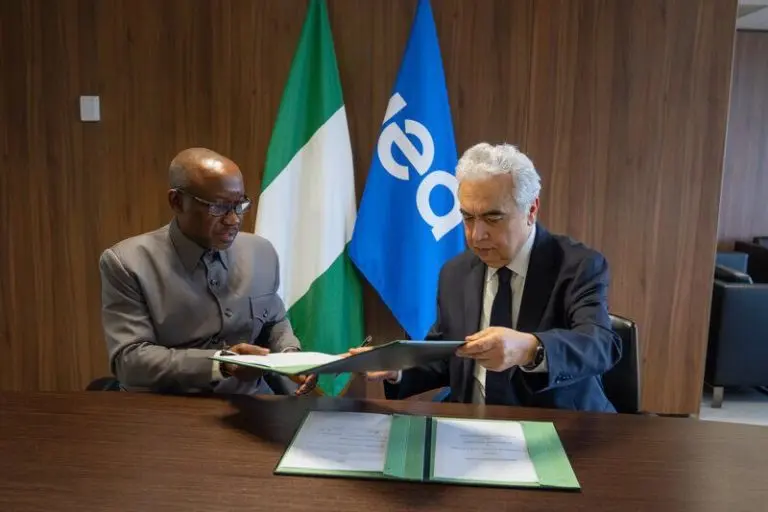

Nigeria, IEA Seal Methane Reduction, Gas Development and Clean Cooking Pact
By Naija Enquirer Staff
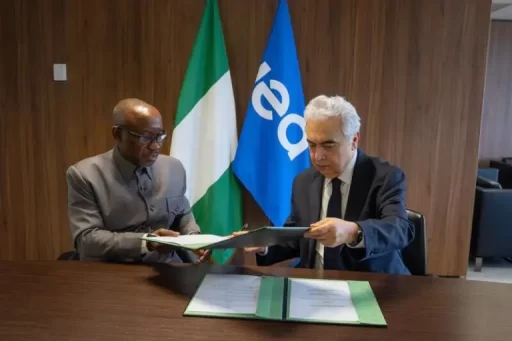
Nigeria has signed a strategic Memorandum of Understanding (MoU) with the International Energy Agency (IEA) to deepen cooperation on methane emissions reduction, gas development, clean cooking access and technical support, in a move aimed at strengthening the country’s petroleum sector competitiveness.
The Minister of State for Petroleum Resources (Gas), Mr. Ekperikpe Ekpo, announced the agreement, describing it as a major milestone in Nigeria’s ongoing energy reform drive.
“I was pleased to sign a Memorandum of Understanding between the Federal Government of Nigeria and the International Energy Agency in Paris, France,” Ekpo said. “This agreement strengthens our cooperation on methane emissions reduction, gas development, clean cooking access and technical support.”
Strengthening Gas Value Chain
According to the minister, the MoU will enhance methane reduction strategies, capacity building, data sharing and infrastructure expansion across Nigeria’s gas value chain.
“This agreement marks an important milestone in our commitment to advancing Nigeria’s petroleum sector in an efficient, sustainable and globally competitive manner,” he stated.
He added that the partnership would promote stronger governance across the gas value chain while supporting the transfer of technical expertise to Nigerian institutions.
Global Alignment on Methane Reduction
The pact aligns Nigeria more closely with global methane reduction initiatives while reinforcing natural gas as a transition fuel within the country’s evolving energy mix.
Analysts say enhanced emissions monitoring and transparency could strengthen investor confidence and improve Nigeria’s standing in global energy markets.
Clean Cooking Target
Ekpo underscored the Federal Government’s clean cooking ambitions under the Renewed Hope Agenda of President Bola Ahmed Tinubu.
“Clean cooking remains a major priority under the Renewed Hope Agenda,” he said. “Our target is to transition five million homes to LPG by 2030.”
The minister expressed appreciation for the IEA’s leadership and partnership, noting that collaboration with global institutions remains critical to unlocking Nigeria’s gas potential while meeting environmental and climate obligations.
The agreement is expected to support policy reforms, emissions data transparency and strategic investments across Nigeria’s gas and petroleum sector.