

Nigeria’s Top Oil Regulators Exit Amid $10bn Investment Push
By Naija Enquirer Staff
The sudden resignation of Nigeria’s top petroleum regulators, coming shortly after the launch of one of the country’s most ambitious oil licensing rounds in years, has raised fresh concerns about regulatory stability in the energy sector.
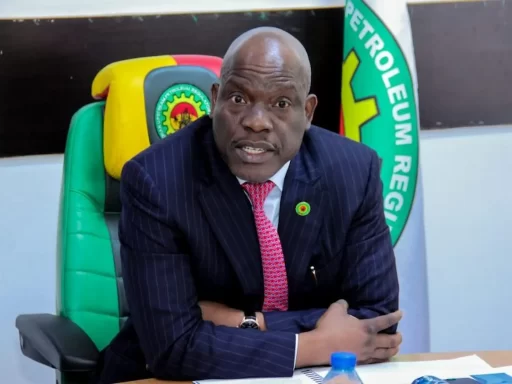
Gbenga Komolafe, Chief Executive of the Nigerian Upstream Petroleum Regulatory Authority (NUPRC), and Farouk Ahmed, head of the Nigerian Midstream and Downstream Petroleum Regulatory Authority (NMDPRA), have both stepped down from their positions.
The exits followed public criticism from Africa’s richest man and Dangote Refinery owner, Aliko Dangote, who accused the downstream regulator of permitting fuel imports at prices that undermine domestic refining. Dangote subsequently submitted a petition against Ahmed to an anti-graft agency.
Despite the sudden leadership changes, President Bola Ahmed Tinubu has nominated replacements for both regulators, with confirmation hearings expected at the Senate in the coming weeks.
The resignations come at a critical time as the NUPRC recently launched Nigeria’s 2025 oil and gas licensing round, offering 50 blocks across onshore, shallow water, deepwater, and frontier basins. The government expects the exercise to attract about $10 billion in investment, add two billion barrels to national reserves, and boost daily crude output by 400,000 barrels.
The licensing round, conducted under the Petroleum Industry Act (PIA), is designed to improve transparency through a digital bidding process and restore investor confidence in Nigeria’s oil and gas sector.
Nigeria has struggled in recent years to meet its OPEC+ production quota due to prolonged underinvestment, oil theft, and pipeline vandalism. Crude output averaged about 1.5 million barrels per day in 2024, below the country’s 1.8 million bpd target.
However, intensified security measures, regulatory reforms, and fiscal incentives have helped reverse the decline. By October 2025, Nigeria’s crude production had risen to about 1.83 million barrels per day, returning the country to the ranks of Africa’s leading oil producers.
Meanwhile, international energy companies including Shell, Chevron, TotalEnergies, and Seplat Energy have increased gas production to support Nigeria’s power sector. Electricity generation averaged about 5,700 megawatts in the final quarter of 2025, representing nearly a 40 per cent increase compared to two years earlier.
Analysts say how Nigeria manages the leadership transition at its regulatory agencies will be critical to sustaining investor confidence and delivering on its ambitious oil and gas expansion plans.