

NLNG Charts Sustainable Future for Global LNG at World LNG Summit
By Naija Enquirer Staff
The Nigeria LNG (NLNG) has called for a new phase of global cooperation aimed at strengthening LNG supply, improving affordability for developing markets, and safeguarding energy expansion in a world increasingly shaped by geopolitical tensions and trade uncertainty.
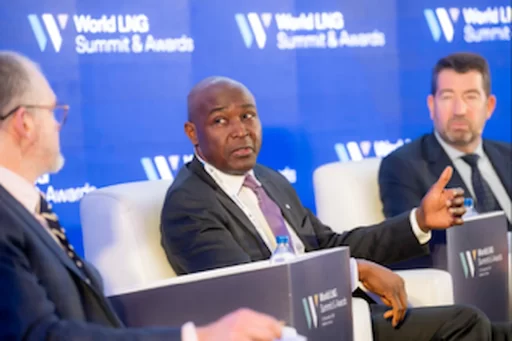
NLNG Managing Director and Chief Executive Officer, Philip Mshelbila, made this position known while speaking during the panel session titled “Energy Expansion in a Challenging Global Trade Environment” at the World LNG Summit & Awards held in Istanbul, Turkey.
Mshelbila stressed that coordinated action across the LNG value chain is essential to prevent a widening global energy divide and maintain natural gas as a central pillar of a balanced, lower-carbon global future.
He stated: “In order to safeguard global energy security from the risks of geopolitics and unilateral (national and regional) policies and sanctions, LNG contracts must evolve from merely defining volume and price to actively managing sovereign risk, through diversification of supply sources, delivery routes and contract terms.”
The NLNG boss warned that global energy expansion will stagnate unless structural challenges in LNG supply, pricing systems, financing models, and decarbonisation efforts are urgently addressed.
Speaking on the impact of shifting trade dynamics, Mshelbila noted that the LNG market has transitioned from a period dominated by short-term contracts to renewed interest in long-term commitments following the 2022 global supply shock. Both contract types, he said, are now in high demand due to elevated global risk and uncertainty.
On LNG’s broader role in meeting rising energy demand, he emphasized that availability, affordability, and decarbonisation remain the most essential requirements for the fuel’s long-term relevance.
He acknowledged that while natural gas is widely viewed as a transition fuel, its importance will outlive the coming decades—provided the industry secures more supply, reduces cost barriers, and accelerates decarbonisation across the LNG value chain.
Mshelbila highlighted major new capacity additions in the United States and Qatar, along with NLNG’s ongoing Train 7 expansion, which will deliver an additional eight million tonnes per annum of production. Despite this growth, he warned that affordability remains a major challenge, as high LNG prices continue to push developing economies back to coal and other cheaper but dirtier energy sources.
Now in its 25th year, the World LNG Summit remains the industry’s leading global platform, uniting policymakers, producers, buyers, investors, and innovators to shape the future of the LNG sector.