


Spiro Targets 1,000 Battery Swap Stations Across Nigeria
By Naija Enquirer Staff
Spiro, a leading electric mobility company, has announced plans to expand its battery swap network in Nigeria from 100 stations to 1,000 by January 2026, as part of its mission to accelerate the adoption of electric motorcycles nationwide.
Nationwide Alternative to Fuel Stations
Speaking at the Media Connect event, Rahul Gaur, Spiro’s Director for West Africa, said the company wants swapping stations to function as a nationwide alternative to petrol stations, enabling riders to replace batteries in minutes instead of waiting hours for charging.
“We have 64 active substations in Lagos. By the end of this year, we are targeting 1,000, and by next year 2,000 across the country,” Gaur said.
Cutting Costs for Riders
Gaur noted that cost remains a major barrier to electric mobility in Nigeria. While earlier electric motorcycle models sold for as much as ₦3 million, Spiro has priced its current models at ₦1.44 million—closer to the ₦1.35 million average for petrol motorcycles.
The company’s Battery-as-a-Service (BaaS) model reduces upfront costs for riders, who pay a fee to swap discharged batteries at designated stations. A 100-kilometre trip on an electric bike costs about ₦2,000, compared to roughly ₦3,000 on petrol bikes, representing 36% savings on fuel and maintenance.
Technology and Safety
Spiro relies heavily on technology to manage its fleet. Its bikes are equipped with GPS trackers and can be remotely immobilised or geo-fenced. Through its Command Centre platform, fleet owners and governments can monitor bike location, speed, downtime, and battery health.
Gaur added that the system could also aid public safety by restricting bike movements in sensitive areas and reducing theft.
Policy Support and Challenges
Nigeria has introduced favourable policies for electric mobility, including the removal of VAT on electric motorcycles. Across Africa, similar measures are emerging: Rwanda has banned new petrol motorcycles, Uganda has cut duties on battery imports, Ethiopia has announced a full transition to EVs, and Togo offers tax exemptions on EV components.
However, unreliable power supply remains a challenge in Nigeria. To tackle this, Spiro uses “second-life” batteries imported from Togo to store energy at swap stations, keeping them operational even when grid power is unavailable.
Scaling Operations
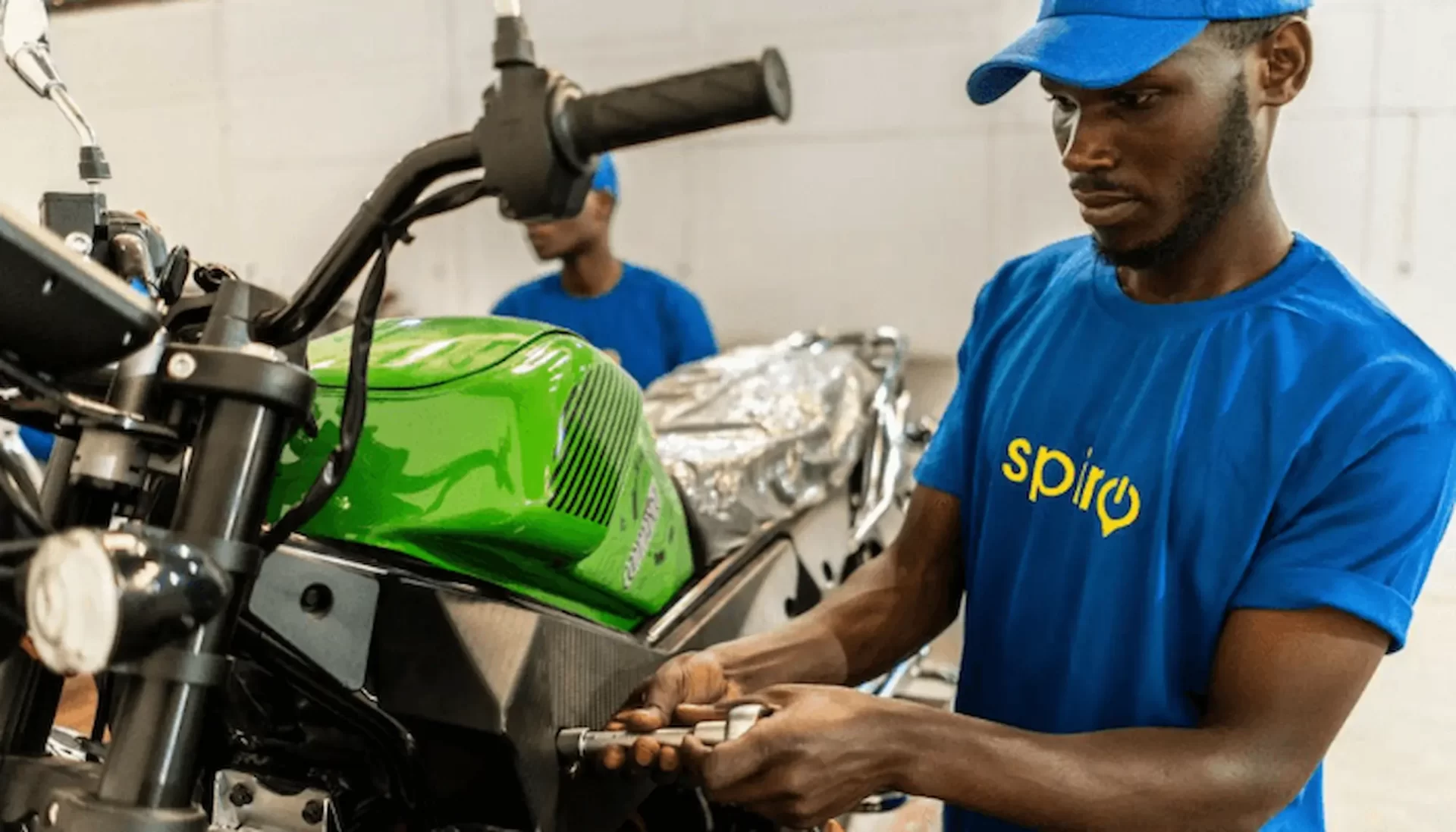
Spiro, which began operations in Nigeria in July 2024, has delivered about 3,500 motorcycles and holds a backlog of 20,000 orders. The company plans to establish a local assembly plant and is training mechanics and students through its Spiro Academy to build technical expertise.
So far, Spiro’s motorcycles have covered 833 million kilometres and completed over 22 million battery swaps across Africa. Earlier this year, the company also launched Africa’s first all-women EV assembly plant.
“We see a future here,” Gaur said, adding that Spiro aims for electric motorcycles to become mainstream in Nigeria within the next decade.