

Uche Nnaji: The Fall of a Minister Who Couldn’t Defend His Certificates
By Naija Enquirer Staff
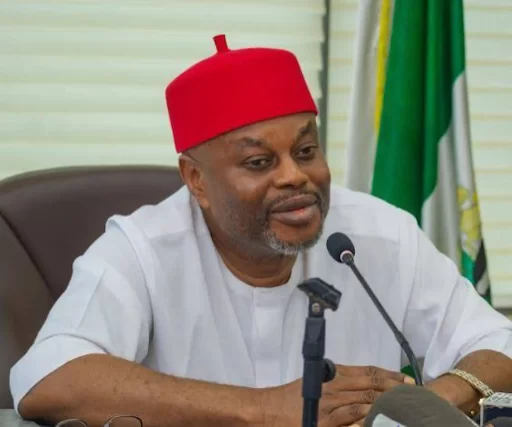
When President Bola Ahmed Tinubu announced the resignation of his Minister of Innovation, Science, and Technology, Geoffrey Uchechukwu Nnaji, on Tuesday, it ended weeks of scandal and months of quiet doubt.
In a post on X (formerly Twitter), presidential spokesperson Bayo Onanuga said the President had “accepted the resignation of Geoffrey Uche Nnaji… following some allegations against him.” He added that Mr Nnaji, who joined the cabinet in August 2023, claimed to have been the target of “blackmail by political opponents” and thanked the President for the opportunity to serve.
It was a restrained end to a controversy that had already shaken the administration’s reputation for vetting its appointees — a scandal built on two certificates that never existed.
An Investigation That Ended a Career
A two-year investigation by Premium Times, published over the weekend, detailed how the minister forged both his university degree and National Youth Service Corps (NYSC) certificates — the very credentials he presented to the presidency, the Senate, and security agencies during his 2023 confirmation.
The newspaper’s report traced how Nnaji, 62, allegedly never completed his studies at the University of Nigeria, Nsukka (UNN), despite claiming to have graduated with a Bachelor of Science degree in Microbiology and Biochemistry in 1985.
Documents obtained from UNN and court filings showed that at the time he claimed to be a graduate, he was still corresponding with the university over a failed final-year examination — a virology course, code-named MCB 431 AB. When Premium Times contacted the university, it confirmed that no degree certificate had ever been issued in his name.
Courtroom Setback
Seeking to stop the university from releasing his records, Nnaji filed an ex parte motion before the Federal High Court in Abuja in September 2025 (case number FHC/ABJ/CS/1909/2025). He asked the court to restrain UNN from “tampering with or releasing” his academic documents and to compel the school to provide his transcript.
Justice Hausa Yilwa, in a ruling on 22 September, rejected the request. While she accepted that the minister had a legal interest in the case, she held that there was “no basis” to prevent the university from disclosing its records.
“The applicant’s request for an injunction lacks merit,” the judge ruled. “The University of Nigeria is not barred from making its records public.”
UNN Breaks Its Silence
On 2 October 2025, UNN Vice-Chancellor Professor Simon Ortuanya wrote to confirm what had long been whispered: “From our records, we cannot confirm that Mr Geoffrey Uchechukwu Nnaji graduated from the University of Nigeria in July 1985. There are no records showing that he completed his studies.”
The statement, consistent with earlier correspondence to the Public Complaints Commission in May 2025, confirmed that no degree certificate was ever issued in his name. Court documents also revealed that Nnaji admitted he had “yet to collect his certificate,” though he insisted that UNN had once confirmed his graduation — a claim the university later disowned.
Aides on the Defensive
In the heat of the controversy, Nnaji skipped a scheduled press conference meant to address the allegations. His aides appeared instead, showing a convocation brochure from 1985 which they claimed contained the minister’s name and photograph. They accused the Enugu State Government of political blackmail.
But both UNN and the NYSC rejected those claims. In separate statements, they denied issuing any of the certificates presented by Nnaji to the government.
From Governorship Bid to Cabinet Scandal
Before joining President Tinubu’s cabinet, Nnaji was the APC governorship candidate in Enugu State in 2023, losing to Peter Mbah of the Peoples Democratic Party (PDP). His appointment as minister was part of Tinubu’s push for political balance across states, but forgery allegations began circulating soon after.
Nnaji, who hails from Akpogu in Nkanu West Local Government Area of Enugu State, had styled himself as a “visionary technocrat.” His brief tenure was largely uneventful, marked more by bureaucratic meetings than major policy achievements.
Public Reaction: A Country’s Frustration
News of his resignation sparked intense debate across social media and civic circles, with many Nigerians viewing it as another failure of leadership integrity.
“Would it be blackmail if indeed he was guilty as alleged? His resignation shows his guilt. A lesson for liars,” said social commentator Saint Jude.
Lawyer and political analyst Bernard Obimma said the evidence left little room for doubt:
“Both UNN and NYSC have disowned him — that tells the story. Even if UNN were lying, how does he explain NYSC’s position that his discharge certificate is fake?”
Public affairs commentator Ebuka Onyekwelu called it “a pity that people of means can forge certificates when they can easily access honest education anywhere in the world.”
‘Not an Admission of Guilt’
In a statement following his resignation, Nnaji said stepping down was “not an admission of guilt but a principled decision to preserve the integrity of ongoing judicial proceedings.” He described the Premium Times report as “a politically motivated campaign” to discredit him and the government.
Despite his defense, the weight of investigative reporting, legal proceedings, and institutional responses proved overwhelming.
Tinubu’s Response and the Road Ahead
Presidency sources said Nnaji’s resignation followed internal consultations. President Tinubu, known for valuing loyalty, reportedly sought to avoid a protracted scandal that could damage his administration’s image.
Bayo Onanuga, the President’s media adviser, called the resignation “the honourable thing to do,” adding that Tinubu “appreciated Nnaji’s service” and wished him well.
With Nnaji’s exit, the Ministry of Innovation, Science, and Technology — crucial to Nigeria’s digital and industrial ambitions — now awaits new leadership. Analysts say the next appointment will test the government’s commitment to transparency.
With Nnaji’s exit, the Ministry of Innovation, Science, and Technology — crucial to Nigeria’s digital and industrial ambitions — now awaits new leadership. Analysts say the next appointment will test the government’s commitment to transparency.
A Broader Lesson
Governance expert Dr. Ngozi Chukwuma of the University of Lagos said the case underscores Nigeria’s institutional weaknesses:
“This is not just about one man. It’s about institutional integrity. When false documents pass through multiple agencies undetected, it shows how broken the vetting process is.”
She urged authorities to introduce forensic verification for all political appointees before confirmation.
The Symbolism of a Fall
For many Nigerians, Nnaji’s resignation represents a rare instance of accountability. The scandal has renewed calls for stronger ethics laws and prosecution of public officials who forge documents.
Whether Nnaji faces criminal investigation remains uncertain. But his reputation — and public trust — has already suffered irreparable damage.
As one social media user put it, “It takes years to earn a degree, but just one forgery to destroy a career.”