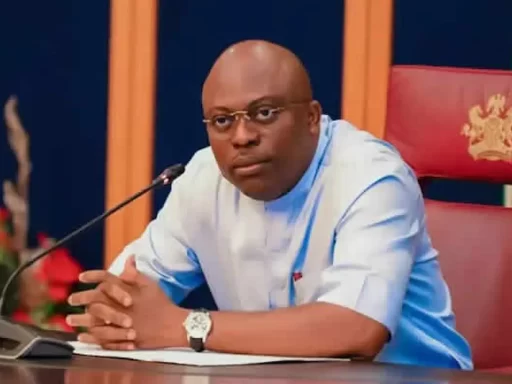




Why Seyi Tinubu’s New Chieftaincy Title Matters in Yorubaland
By Naija Enquirer Staff
A Palace Ceremony with Political Weight
When the Alaafin of Oyo, Oba Abimbola Owoade, conferred the chieftaincy title of Okanlomo of Yorubaland on Seyi Tinubu, son of President Bola Tinubu, the ceremony went beyond royal pageantry. Held on Sunday at the Alaafin’s palace in Oyo State, the event drew a large gathering of political leaders, traditional rulers and senior government officials, highlighting the enduring intersection of culture, power and politics in Nigeria.
Seyi Tinubu arrived at the palace accompanied by his wife, Layal, alongside associates and well-wishers, joining a long list of dignitaries paying homage to one of Yorubaland’s most influential traditional institutions.
What Does ‘Okanlomo of Yorubaland’ Mean?
According to the Alaafin, the title Okanlomo of Yorubaland loosely translates as “the beloved child” or “one who is dear to the hearts of the Yoruba people.” Beyond its literal meaning, the title is symbolic, representing a custodian of Yoruba values, unity and cultural heritage.
Palace sources say the honour carries expectations, including the promotion of Yoruba culture, support for education and social welfare, and the responsibility to foster unity within and beyond the South-West. While chieftaincy titles are largely ceremonial, they often serve as moral endorsements and carry significant social influence.
Tradition, Lineage and Modern Nigeria
Seyi Tinubu, born on October 13, 1985, is a lawyer and entrepreneur. He holds a Bachelor of Laws and a Master of Laws in Corporate and Commercial Law from the University of Buckingham in the United Kingdom and was called to the Nigerian Bar in 2013.
His elevation reflects a long-standing Nigerian tradition in which royal institutions recognise individuals seen as influential or connected to power, regardless of age or political office. Critics argue such honours can blur the line between cultural recognition and political symbolism, while supporters see them as reinforcing continuity between traditional authority and contemporary governance.
A Northern Political Figure Honoured Alongside
At the same ceremony, the Alaafin also conferred the title of Obaloyin of Yorubaland on Senator Abdul’Aziz Yari, former governor of Zamfara State and current chairman of the Senate Committee on Water Resources and Sanitation.
The palace described the title as symbolising love, compassion and justice, as well as serving as a bridge between the physical and spiritual realms. Senator Yari arrived with a delegation of northern senators and political figures, underscoring the Alaafin’s broader message of national unity and cross-regional engagement.
Who Was in Attendance?
The ceremony attracted several high-profile figures, reinforcing its national significance. Among those present were Senate President Godswill Akpabio; Deputy Speaker of the House of Representatives, Benjamin Kalu; Sokoto State Governor Abdullahi Sokoto; former Ogun State Governor Gbenga Daniel; and members of the Federal Executive Council.
Others included the Minister of Power, Bayo Adelabu; the Minister of Finance and Coordinating Minister of the Economy, Olawale Edun; the Statistician-General of the Federation, Adeyemo Adeniran; Senator Teslim Folarin; and former Kano State Governor Abdullahi Ganduje. Traditional rulers from across Nigeria and the Republic of Benin were also in attendance.
Culture, Influence and Quiet Messages
In Yorubaland, chieftaincy titles are rarely just about honour. They often signal belonging, legitimacy and influence. By conferring titles on figures linked to political power from both southern and northern Nigeria, the Alaafin appears to be reinforcing the palace’s role as a cultural bridge in a country frequently divided along ethnic and regional lines.
Whether these honours translate into tangible social impact remains to be seen. For now, the ceremony once again underscores how Nigeria’s traditional institutions continue to shape narratives around power, identity and unity in the modern state.