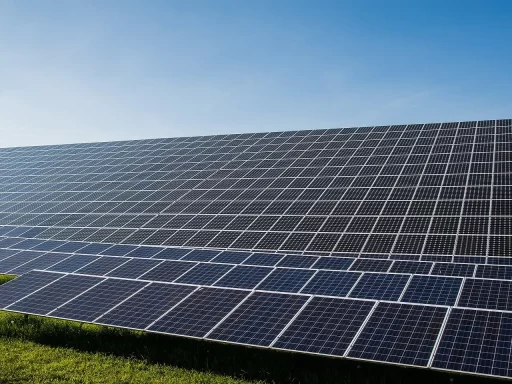



President Bola Tinubu’s push for economic growth is receiving major support from Nigeria’s expanding renewable energy sector as the Rural Electrification Agency, REA, continues to deploy mini-grid solutions across underserved communities nationwide.
For many years, millions of Nigerians living in rural and peri-urban areas struggled with poor electricity supply, forcing homes and businesses to rely heavily on petrol generators or remain without power entirely. However, the country’s off-grid energy sector has witnessed significant expansion through the REA’s decentralized renewable energy projects.
The agency’s growing network of mini-grid systems is now being viewed as a major contributor to the Federal Government’s long-term economic ambitions, including plans to build a $1 trillion economy.
Tinubu Administration Expands Renewable Energy Drive
The progress recorded in the sector has been linked to policy reforms introduced under President Tinubu’s administration.
The government prioritized decentralized electricity solutions as part of efforts to reduce pressure on the national grid while improving access to reliable power in remote communities.
The appointment of Dr. Abba Aliyu as Managing Director of the Rural Electrification Agency has also been credited with accelerating reforms and improving project execution across the agency.
Under the current leadership, the REA has shifted focus toward transparency, private sector participation and long-term sustainability.
REA Deploys Digital Monitoring System
The agency has introduced advanced digital monitoring platforms to improve accountability and project tracking.
These systems allow officials to monitor electricity generation levels, connected communities and operational performance in real time.
The use of Internet of Things, IoT, technology and digital data platforms has also helped reduce abandoned projects while improving confidence among international donors and investors.
Authorities say funding disbursements are now tied directly to verified project performance and measurable outcomes.
Nigeria Expands Local Solar Manufacturing
Nigeria’s renewable energy sector has also witnessed increased local manufacturing activity.
Installed local solar panel production capacity has reportedly grown from 120 megawatts to about 300 megawatts under the current expansion drive.
Additional projects expected to add over 3.7 gigawatts of production capacity are also being developed across the country.
Locally manufactured solar panels are now being exported to neighbouring West African countries, strengthening Nigeria’s position in the regional renewable energy market.
DARES Programme Attracts Private Investment
One of the agency’s largest initiatives is the Distributed Access through Renewable Energy Scale-Up, DARES, programme.
The project is valued at about $750 million and is designed to attract more than $1 billion in private sector investment into Nigeria’s renewable energy sector.
Through the programme, private developers are required to finance and complete projects before accessing government-backed incentives.
The initiative aims to provide electricity access to more than 17 million Nigerians while powering millions of households and businesses nationwide.
According to available figures, more than 1,000 mini-grids are currently being developed across different parts of the country.
Authorities also disclosed that dozens of interconnected mini-grid projects are being deployed in partnership with electricity distribution companies to improve stable power supply.
Mini-Grids Boost Rural Economy
The expansion of mini-grid infrastructure is expected to support agriculture, small businesses and local manufacturing.
Solar-powered processing facilities, irrigation systems and cold storage units are already helping rural farmers reduce losses and improve productivity.
Small businesses such as salons, tailoring shops, welding centres and healthcare facilities are also benefiting from lower operating costs due to reduced dependence on fuel-powered generators.
The renewable energy expansion is additionally expected to strengthen regional trade opportunities by supporting cross-border electricity supply within West Africa.
REA Expands Partnerships Across Nigeria
The REA has continued to partner with financial institutions and international organizations to strengthen investments in off-grid electricity projects.
The agency recently signed agreements aimed at supporting electrification projects in healthcare centres and public universities across several states.
Projects linked to the initiative are already being implemented in institutions including the Federal University of Technology, Akure.
The continued expansion of renewable energy infrastructure is increasingly positioning mini-grid technology as a key driver of economic growth, industrial development and improved electricity access across Nigeria.